On the eve of February 1, 2025, the United States will impose sweeping tariffs on Canada, Mexico, and China, three of its largest trading partners, setting the stage for a potential trade conflict that could disrupt global markets. The announcement from the White House on Friday revealed that products from Canada and Mexico will be subject to a hefty 25% tariff, while goods from China will face a 10% levy.
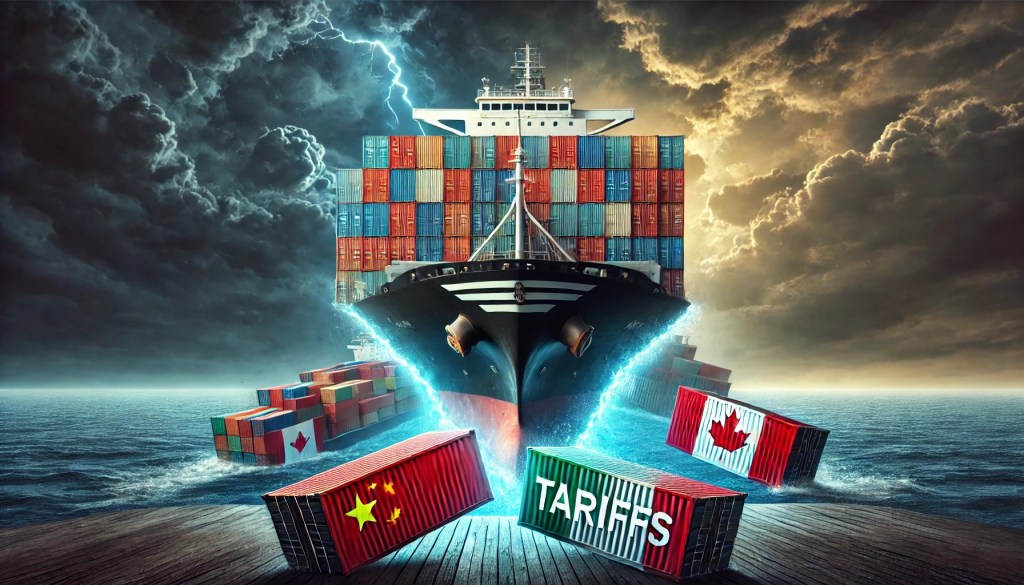
The decision marks a significant escalation in President Trump’s trade policy, which has been characterized by his “America First” approach. Trump’s administration insists that the tariffs are necessary to address economic imbalances and to generate substantial revenue for the federal government. In his view, the tariffs will compel foreign nations to negotiate better terms and “bend to his demands,” thereby benefiting U.S. consumers and businesses. However, economists have raised concerns that such policies could backfire, resulting in higher prices for American consumers and potentially stoking inflation at a time when many are already grappling with rising costs.
The immediate reactions from the affected nations have been swift and resolute. Canada has pledged to retaliate with a “forceful but reasonable” response, while Mexico has formulated contingency plans, although the details remain undisclosed. China, already embroiled in trade tensions with the U.S., has vowed to “firmly defend” its interests, signaling further escalation in an already volatile trade environment. The prospect of a trade war between these major economies could have far-reaching implications not just for the U.S., but for the global economy at large.
Economists argue that higher tariffs on goods will ultimately be passed on to U.S. consumers, who will bear the brunt of increased prices on everyday products. This could negate the President’s promise of reducing living costs for ordinary Americans, one of his key pledges during his time in office. Furthermore, the tariffs could disrupt global supply chains, leading to shortages, inflationary pressures, and job losses across industries that rely on imported goods.
The stock market has already responded negatively to the news, with Wall Street’s Dow Jones industrial average dipping by 0.5% following the announcement. Investors appear apprehensive about the economic fallout from the tariffs, particularly given the potential for retaliatory actions from major trade partners.
Trump’s tariff strategy has already caused ripples in the international arena. Canada and Mexico, two of the U.S.’s closest allies, are prepared for a protracted trade battle. Mexico’s President, Claudia Sheinbaum, emphasized that the country has multiple responses ready, while Canadian Prime Minister Justin Trudeau warned of “difficult times” ahead if the tariffs go into effect. The Canadian government has signaled it may target specific U.S. exports, such as Tesla vehicles and alcohol, as part of its countermeasures.
While President Trump has made clear his desire to impose tariffs on a range of foreign imports, including steel, semiconductors, and drugs, the practicality of such measures remains uncertain. The process of implementing tariffs typically requires time-consuming investigations and regulatory processes, though Trump has hinted at declaring an economic emergency to expedite the implementation of certain duties.
The consequences of Trump’s tariff policies are complex and multifaceted. While they may generate revenue for the U.S. government, they could also ignite a destructive trade war with far-reaching consequences. Both the U.S. and its trading partners stand to lose in the long run, as global supply chains are disrupted, prices rise, and consumer confidence erodes.
As tensions rise, the world will be watching closely to see how the situation unfolds. What is clear, however, is that the impact of these tariffs will be felt well beyond the borders of the United States.
 Ioana Dorhoi, PhD – Government Relations and Public Affairs
Leave a comment